Tirzepatide Weight Loss Results: What the Data Shows
SURMOUNT-1 trial data shows tirzepatide produces 15–22.5% average weight loss at 72 weeks. Here is what the research actually shows and what to expect.
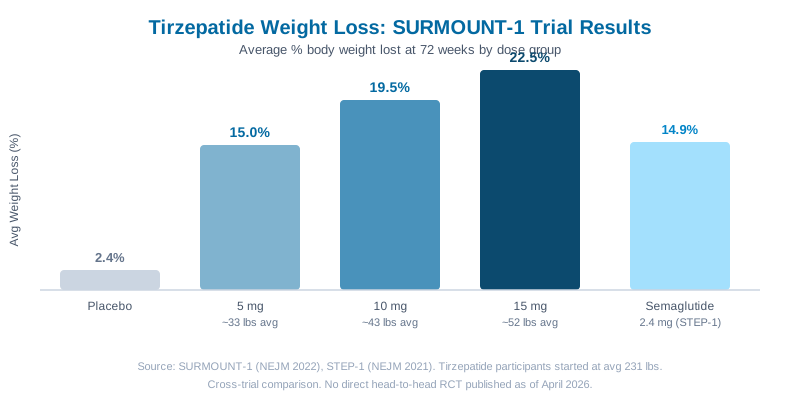
Quick Answer: In the SURMOUNT-1 trial, participants on tirzepatide lost an average of 15% of body weight at 5 mg, 19.5% at 10 mg, and 22.5% at 15 mg over 72 weeks, compared to 2.4% in the placebo group.
Tirzepatide weight loss results are among the strongest ever recorded in a pharmacological trial for obesity. The SURMOUNT-1 trial, published in the New England Journal of Medicine in 2022, enrolled 2,539 adults without diabetes and ran for 72 weeks. The results shifted how clinicians think about GLP-1 based treatments.
SURMOUNT-1 Trial: The Core Numbers
The trial tested three maintenance doses against placebo. All participants received dietary counseling and had weekly clinic contact.
| Dose | Average Weight Loss | % Achieving ≥20% Loss |
|---|---|---|
| 5 mg | 15.0% (33 lbs on avg) | 30% of participants |
| 10 mg | 19.5% (43 lbs on avg) | 50% of participants |
| 15 mg | 22.5% (52 lbs on avg) | 57% of participants |
| Placebo | 2.4% (5 lbs on avg) | 3% of participants |
The average starting weight of participants was about 231 lbs (105 kg). A 22.5% loss on that baseline means roughly 52 lbs on average, and about 1 in 3 participants on 15 mg lost 25% or more of their starting weight.
How Dose-Dependent Response Works
The tirzepatide weight loss relationship is dose-dependent, meaning higher doses produce greater results on average. But this isn't linear at the individual level.
Some patients lose more weight at 10 mg than others lose at 15 mg. Genetic factors, baseline insulin resistance, gut microbiome composition, baseline metabolic rate, and adherence all affect individual outcomes. The dose-response relationship is a population-level observation, not a guarantee for any individual.
The practical implication: if you're losing meaningful weight at 10 mg with manageable side effects, there's no strong reason to push to 15 mg. Your provider can make that call based on your specific trajectory.
When Does Tirzepatide Weight Loss Start?
In SURMOUNT-1, weight loss began in the first 4 weeks for most participants, even at the 2.5 mg starting dose. Average loss in the first 4 weeks was modest: 2–4 lbs.
The trajectory steepens between weeks 8–24, as doses escalate and appetite suppression becomes more consistent. Most of the weight loss happens in the first 36 weeks. After that, a plateau typically develops as the body adjusts to the new weight set point.
Realistic monthly expectations by phase:
- Weeks 1–4 (2.5 mg): 2–4 lbs
- Weeks 5–8 (5 mg): 4–6 lbs/month
- Weeks 9–20 (7.5–12.5 mg): 4–8 lbs/month
- Weeks 21+ (15 mg maintenance): 2–4 lbs/month until plateau
These are averages with significant individual variation. Some patients lose faster; some slower.
Tirzepatide Weight Loss vs. Semaglutide
The most commonly asked comparison is tirzepatide vs. semaglutide (Ozempic/Wegovy). No head-to-head randomized controlled trial exists as of April 2026, but cross-trial comparisons show:
- Tirzepatide 15 mg: ~22.5% average weight loss (SURMOUNT-1)
- Semaglutide 2.4 mg (Wegovy): ~14.9% average weight loss (STEP-1 trial)
Tirzepatide acts on both GLP-1 and GIP receptors; semaglutide acts on GLP-1 alone. The dual mechanism appears to produce meaningfully better weight loss for most patients. For a full comparison, see tirzepatide vs semaglutide.
Factors That Affect Your Individual Results
Dose and adherence
Consistent weekly injections at the correct dose matter. Missing doses, especially during escalation, disrupts the pharmacokinetics and often blunts results. If you're on compounded tirzepatide, verify your injection volume with the tirzepatide dosage calculator before each dose. Drawing the wrong volume means not getting the dose you think you're getting.
Dietary patterns
Tirzepatide suppresses appetite but doesn't specify what you eat. Patients who maintain higher protein intake (0.7–1.0 g/lb lean body mass) and limit ultra-processed foods lose more weight and retain more muscle mass than those who just eat less of the same diet.
Physical activity
SURMOUNT-1 included structured diet counseling but not mandatory exercise. Adding resistance training to a tirzepatide regimen improves body composition by preserving muscle while losing fat, and may support long-term weight maintenance.
Baseline insulin resistance
Patients with higher degrees of insulin resistance (pre-diabetes, metabolic syndrome, PCOS) often respond exceptionally well to tirzepatide, likely because the GIP component specifically improves adipose tissue insulin sensitivity. Some of the most dramatic weight loss cases involve patients who had been metabolically stuck for years.
What Happens When You Stop?
This is a critical point many patients aren't told upfront: the weight loss from tirzepatide is largely maintained only while taking the medication. The SURMOUNT-4 trial (which withdrew tirzepatide after 36 weeks of treatment) showed participants regained about two-thirds of their lost weight within a year of stopping.
This doesn't mean tirzepatide "doesn't work." It means obesity is a chronic condition that requires ongoing treatment, much like blood pressure or cholesterol medications. Most patients who do well on tirzepatide are on it for years, not months.
Type 2 Diabetes Patients: Additional A1C Benefits
For patients using tirzepatide (as Mounjaro) for type 2 diabetes, weight loss is accompanied by A1C reductions of 1.8–2.5% on average. The SURPASS trial program showed these A1C effects are independent of weight loss and add to the cardiometabolic benefit.
Glucose improvement often begins in the first 2–4 weeks, well before significant weight loss occurs.
Setting Realistic Expectations
The clinical trial results represent controlled conditions with weekly check-ins, dietary counseling, and motivated participants. Real-world results vary. Population studies on GLP-1 medications outside of trials show average weight loss of 10–15% over 12 months, still excellent, but somewhat below trial results.
The tirzepatide dosage schedule is designed to build to the dose where your results happen. Don't judge effectiveness at 2.5 mg or 5 mg; those are tolerance phases. The real data starts accumulating at 7.5 mg and above.
Use the weight and dose calculator to confirm you're drawing the correct volume from your compounded vial at each escalation. Being underdosed by 10–20% because of a volume error is a common and entirely preventable reason for disappointing results.
For timeline questions, see the complete tirzepatide dosage schedule. For cost questions that affect long-term access, the tirzepatide cost guide has current pricing across all options.
The about page has information on the clinical research methodology behind this site.
Ready to calculate your dose?
Free tirzepatide injection volume calculator. No signup required.