Compounded Tirzepatide vs Mounjaro: Key Differences
Compounded tirzepatide costs $150–300/month vs $1,000+ for Mounjaro. Learn what the differences mean for safety, quality, and your wallet.
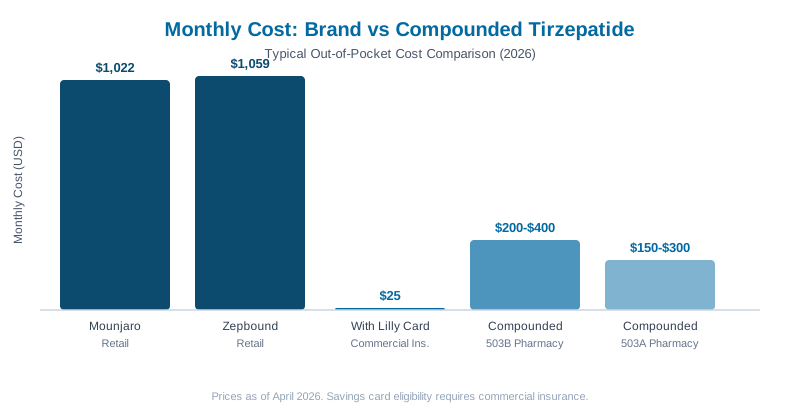
Quick Answer: Compounded tirzepatide is a lower-cost alternative ($150–$300/month) made by licensed pharmacies, while brand-name Mounjaro/Zepbound runs $1,000–$1,100/month at list price. The active ingredient is the same molecule, but oversight and formulation details differ.
Compounded tirzepatide exploded in availability during 2023-2024 when the FDA declared tirzepatide in shortage, which legally allowed licensed compounding pharmacies to produce their own versions. That shortage was officially resolved in early 2025, but access to compounded versions remains significant through certain channels. Understanding the differences matters before you choose.
What Is Compounded Tirzepatide?
Compounding pharmacies mix, combine, or alter drug ingredients to create a customized medication. Two federal frameworks govern them:
503A pharmacies are traditional compounding pharmacies that make medications for individual patients with a valid prescription. They operate under state pharmacy boards and FDA oversight but are not required to meet manufacturing-grade standards.
503B outsourcing facilities are registered with the FDA and held to higher standards, meeting Current Good Manufacturing Practice (CGMP) standards, similar to commercial drug manufacturers. They can produce larger batches and supply healthcare providers directly.
Both types have legally produced compounded tirzepatide. The quality difference between a well-run 503B facility and brand-name Mounjaro is much smaller than between a 503B and a poorly regulated 503A operation.
Cost Comparison: Compounded vs Brand
This is the main reason patients look at compounded options.
| Product | Typical Monthly Cost |
|---|---|
| Mounjaro (Eli Lilly, retail) | $1,022–$1,100 |
| Zepbound (Eli Lilly, retail) | $1,059–$1,100 |
| Compounded tirzepatide (503B) | $200–$400 |
| Compounded tirzepatide (503A) | $150–$300 |
With the Eli Lilly savings card, commercially insured patients can pay as little as $25/month for Mounjaro. Without insurance or with a non-covered plan, you're paying close to list price. That gap of nearly $800-$900/month is why compounded options attract so many patients.
Telehealth platforms like Hims, Ro, and others have offered compounded tirzepatide at various price points. Availability and pricing shift frequently depending on FDA policy and manufacturer supply chains.
The FDA Shortage History
The FDA added tirzepatide to the drug shortage list in 2022-2023 as demand for Mounjaro and later Zepbound outpaced Eli Lilly's manufacturing capacity. During an active shortage, FDA regulations allow 503A and 503B facilities to compound copies of the drug.
In early 2025, the FDA removed tirzepatide from the shortage list, triggering an enforcement process against compounders. However, some 503B facilities have challenged this in court, and as of April 2026, certain compounded formulations remain available through specific prescribers and pharmacies, though the regulatory status continues to evolve.
The practical takeaway: if you're currently on compounded tirzepatide, check with your prescriber or pharmacy about current availability in your state. See also the breakdown of tirzepatide costs and insurance options for the most current pricing data.
Quality Differences: What Actually Matters
Compounded tirzepatide uses the same active pharmaceutical ingredient (API), tirzepatide, as Mounjaro and Zepbound. The difference is in manufacturing controls, sterility testing, and formulation stability.
Brand Mounjaro/Zepbound:
- Manufactured by Eli Lilly under FDA-approved CGMP conditions
- Every batch tested for potency, purity, and sterility
- Pre-filled auto-injector pens with consistent, pre-measured dose delivery
- Cold chain management verified from manufacturer to pharmacy
Compounded (503B):
- Must follow CGMP but not subject to same pre-market approval process
- May use vials requiring patient to draw up dose with a syringe
- Quality depends heavily on the specific facility
- Some facilities have excellent third-party testing; others do not
Compounded (503A):
- Lower regulatory bar
- Patient-specific batches
- Quality can vary significantly
The compounded vials require you to draw up your own dose, which introduces the possibility of dosing errors. This is why tools like the tirzepatide injection volume calculator are particularly important for compounded users since you're measuring your own dose and an error of 0.1 mL at 10 mg/mL concentration means a 1 mg difference.
Concentration Differences
Brand Mounjaro comes as pre-filled pens at fixed doses (2.5 mg, 5 mg, 7.5 mg, 10 mg, 12.5 mg, 15 mg), with no math required.
Compounded tirzepatide typically comes as a multi-dose vial at a specific concentration, commonly:
- 5 mg/mL
- 10 mg/mL
- Sometimes 2.5 mg/mL for starting doses
You must calculate the volume to draw based on your prescribed dose and the vial's concentration. At 5 mg/mL, a 7.5 mg dose requires 1.5 mL. At 10 mg/mL, the same dose is only 0.75 mL. Getting this wrong by even 0.25 mL can mean a meaningful dose difference. See the full guide to tirzepatide concentrations for worked examples.
When Brand Name Makes Sense
- You have insurance coverage that makes Mounjaro/Zepbound affordable (under $200/month out of pocket)
- You're uncomfortable drawing up your own injections
- You want the simplicity of a pre-filled pen
- You're in a state where compounded availability is limited
- Your prescriber prefers to prescribe brand
When Compounded Makes Sense
- You're uninsured or your plan doesn't cover weight loss drugs
- Your prescriber works with a reputable 503B compounding facility
- You're comfortable with syringe-based injections
- Cost is the primary barrier to accessing the medication at all
- You've verified the pharmacy's COA (certificate of analysis) for your batch
The most important thing you can do with compounded tirzepatide is confirm your vial's concentration in writing from your pharmacy, then calculate your injection volume carefully before every dose. If you haven't already, try the tirzepatide dose volume calculator ; it takes about 30 seconds and removes any math error risk.
For more on what makes injection technique different with vials versus pens, read the step-by-step tirzepatide injection guide.
Learn more about the team behind this site and our approach to medical information on our about page.
Ready to calculate your dose?
Free tirzepatide injection volume calculator. No signup required.