How to Inject Tirzepatide: Step-by-Step Guide
Learn tirzepatide injection technique including site rotation, needle selection, and the exact steps to inject safely every week.
Quick Answer: Inject tirzepatide subcutaneously into your abdomen, thigh, or upper arm, rotating sites weekly. Use a 29–31 gauge, 4–6 mm needle at a 90° angle (or 45° if lean), and inject slowly over 5–10 seconds.
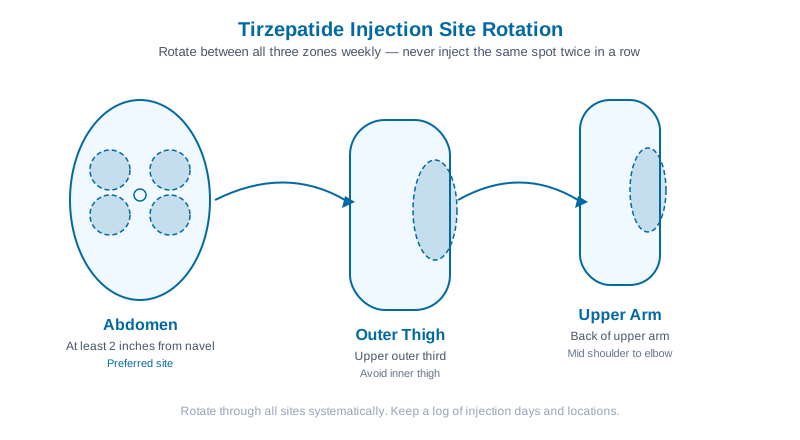
Getting tirzepatide injection technique right matters more than most patients expect. A bad injection hurts. A good one is almost painless. And consistent site rotation prevents the lumps and skin changes that can affect absorption over time.
This guide covers everything for patients using compounded tirzepatide vials with a syringe. If you're using a brand-name Mounjaro or Zepbound auto-injector pen, the site rotation and pre-injection steps still apply, though the mechanics of the device differ.
What You Need Before You Start
- Compounded tirzepatide vial (stored at 36–46°F, removed from fridge 30 minutes before injecting)
- Insulin syringe: 29–31 gauge, 1 mL capacity
- Alcohol swabs
- Sharps container
- Your calculated dose in mL (use the tirzepatide dosage calculator if you haven't confirmed your volume)
The needle gauge matters. 29G is standard and widely available. 31G is finer and slightly more comfortable but requires slower aspiration. Avoid anything coarser than 28G, which hurts more and isn't necessary for a subcutaneous injection.
Needle length: 4–6 mm for most adults. If you have significant subcutaneous fat at the injection site, 8 mm is acceptable. Longer is not better. You want to stay in the subcutaneous layer, not go into muscle.
Tirzepatide Injection Site Options
You have three approved zones. Rotate between all three.
Abdomen
The preferred site for most patients. Use the soft tissue at least 2 inches (5 cm) from your belly button. Avoid the area directly around the navel, where the tissue is firmer and absorption varies more.
Work in a clock-pattern around your abdomen: left side one week, right side the next, varying upper and lower quadrants. Never inject into the same spot two weeks in a row.
Thigh
The outer third of your upper thigh (not the inner thigh or the very top near the hip). Pinching the tissue here is helpful. This site tends to be a bit more painful than the abdomen for many people, but it's convenient and reliable.
Upper Arm
The fatty tissue on the back of your upper arm, about halfway between shoulder and elbow. This site is harder to self-inject. If you're doing upper arm injections solo, use your non-dominant arm and keep it relaxed at your side. A 45° angle works better here than 90°.
If a family member or partner can help with upper arm injections, the technique is actually very reliable.
Step-by-Step Tirzepatide Injection Technique
Step 1: Calculate your dose
Confirm your injection volume before drawing. For example, if your dose is 5 mg and your vial is 10 mg/mL, you need 0.5 mL. The weekly dose volume calculator does this for you. Write it down.
Step 2: Prepare the vial
Wipe the rubber stopper with an alcohol swab. Let it air-dry for 10 seconds. Never blow on it or wave it; let the alcohol evaporate on its own.
Step 3: Draw your dose
Pull back the syringe plunger to draw air equal to your dose volume (e.g., pull to 0.5 mL mark). Insert the needle into the vial stopper and push the air in. This pressurizes the vial and makes drawing easier. Turn the vial upside down and pull back the plunger to draw slightly more than your dose. Tap the syringe to raise bubbles, then push the plunger to your exact dose mark. Remove the needle from the vial.
Step 4: Choose your site and clean it
Wipe the chosen site with an alcohol swab. Let it dry for 10 seconds. Don't inject into wet skin; it stings more.
Step 5: Pinch and inject
Pinch a fold of skin between your thumb and forefinger (about 2 inches of skin). This lifts the subcutaneous layer and reduces the chance of hitting muscle.
Insert the needle at 90° (or 45° if you're lean or using the upper arm). Go in smoothly. Don't jab, but don't go so slowly that you hesitate. Confidence matters.
Step 6: Inject slowly
Push the plunger down over 5–10 seconds. Faster injection can cause more pain and a burning sensation. This is where most impatient patients make their first mistake.
Step 7: Remove and hold
Remove the needle, then press the site gently with a clean finger or gauze for 10–15 seconds. Don't rub; rubbing can cause bruising and pushes medication into adjacent tissue unevenly.
Step 8: Dispose safely
Place the used needle and syringe immediately into a sharps container. Never recap needles with two hands. Use a single-hand scoop method if necessary, though a proper sharps container is always the safer option.
Common Mistakes and How to Avoid Them
Injecting cold medication
Injecting cold tirzepatide directly from the fridge is one of the most common causes of injection site pain. Take the vial out 30 minutes before your scheduled injection. Even 15 minutes helps.
Same site, every week
Using the same spot repeatedly causes lipohypertrophy, a hardened fibrous tissue that doesn't absorb medication properly. The dose you think you're getting may not be fully absorbed. Rotate sites systematically and keep a brief log.
Bubbles in the syringe
Small bubbles (under 0.1 mL total) are not dangerous subcutaneously, but they displace your dose. Get them out. Tap the syringe firmly, push bubbles to the top, then push them back through the needle into the vial before withdrawing your final dose.
Injecting at the wrong depth
A subcutaneous injection should feel like very little resistance. If you feel significant pressure, you may be in muscle or skin is too shallow. If medication leaks back out when you withdraw, you were too shallow.
Rushing the draw calculation
Compounded tirzepatide comes in different concentrations, with 5 mg/mL and 10 mg/mL being most common. Drawing 1.0 mL from a 10 mg/mL vial gives you 10 mg. The same 1.0 mL from a 5 mg/mL vial is only 5 mg. Confirming your vial concentration before every new vial is not excessive caution; it's basic safety. See the tirzepatide concentration guide for full worked examples.
Injection Site Reactions
Some redness, minor swelling, or tenderness at the injection site is normal and usually resolves within 24–48 hours. A small lump that's tender for a day or two is also common and not dangerous.
Contact your prescriber if you see:
- Redness spreading beyond a 2-inch radius
- Warm, hard lump that grows over 48 hours
- Pus or discharge
- Fever with site swelling
These could indicate infection, which is rare with proper technique but not impossible.
Injection Timing and Rotation Tracking
Tirzepatide is a once-weekly injection. Pick a day and stick to it. Many patients choose the same day as a weekly habit anchor (same day as a regular appointment, workout, etc.).
Track your sites on a simple rotation chart or phone note. A working pattern: abdomen-left / abdomen-right / thigh-left / thigh-right / upper arm-left / upper arm-right, then repeat.
For background on how compounded vial injections differ from brand-name auto-injector pens, read compounded tirzepatide vs Mounjaro. For guidance on what to do when a weekly dose gets skipped, see what to do after a missed tirzepatide dose.
The about page has more information on our clinical review process for this site's content.
Ready to calculate your dose?
Free tirzepatide injection volume calculator. No signup required.